


VOCs in Paint: What Homeowners Should Actually Know


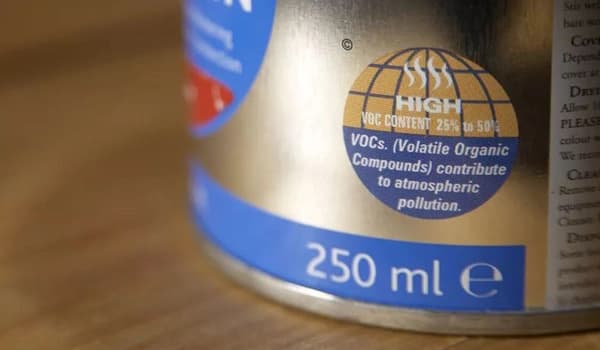
It’s been decades since VOCs in paint became a recognized issue, but indoor air continues to worry homeowners to this date. These invisible gases are released as paint dries, linger indoors, and affect the air you breathe – especially in homes, condos, and apartments across Toronto, where windows may stay closed and ventilation can be limited.
This guide explains volatile organic compounds in paint, their health risks, Canadian regulations, and simple tips for safer paint choices.
What Are VOCs in Paint?
Volatile organic compounds, or VOCs, are carbon-based chemical compounds in solvent-based paints and coatings. They’re also found in water-based products, but in smaller quantities. Ever felt the strong “paint smell” after opening a can of paint? That’s VOCs being released.
VOCs in paint formulas are mainly the solvents and additives that help it flow, dry, and stick to surfaces. However, they evaporate at room temperature and off-gas (emit chemicals in the form of gas) into indoor air while the paint is drying and even months after it’s fully dried and cured.
Health Effects of VOCs in Paint
As volatile organic compounds in paint evaporate –particularly during and shortly after application– they can cause immediate, temporary symptoms in some people, including:
- Irritation in the eyes, nose, and throat, such as burning, scratchiness, or discomfort
- Headaches, fatigue, dizziness, and nausea (most common when VOC levels are high, ventilation is poor, and among pregnant people and seniors)
- Discomfort when breathing or shortness of breath (more likely when using stronger solvent-based paints)
- Sensitivity in children, as their lungs and immune systems are still developing
- Sensitivity in pets due to smaller bodies and faster breathing rates (the smaller the animal, the more susceptible)
- Aggravated symptoms in people with asthma or chronic respiratory conditions
These effects are widely documented by health authorities like Health Canada. But it also states that most VOC levels found in Canadian homes don’t usually pose a significant health risk, especially with adequate ventilation.
Still, you should be aware of prolonged exposure. According to Canada.ca, certain VOCs in paint (e.g., formaldehyde, benzene) are classified as carcinogens or suspected carcinogens.
VOC Regulations and Limits in Canada
Volatile organic compounds in paint are regulated under the Volatile Organic Compound (VOC) Concentration Limits for Architectural Coatings Regulations, enforced by the Canadian Environmental Protection Act, 1999. They set maximum VOC content limits (measured in g/L) for different categories of architectural coatings, including paints, stains, and varnishes.
Note that these limits don’t regulate indoor air VOC exposure; they aim to reduce harmful emissions at the source (products sold in Canada). Also, the rules apply to manufacturers, importers, and sellers, not end users.
As a Toronto homeowner concerned about exposure to VOCs in paint, here’s what to consider:
- “Low-VOC” or “zero-VOC” labels aren’t mandated. Although many brands include them on cans and technical data sheets for consumer transparency
- Maximum limits vary by paint type. Flat, non-flat, and glossy options may have different allowed VOC levels (100 g/L, up to 150 g/L, and up to 250 g/L, respectively).
- Some products may be exempt or subject to different limits based on size or purpose (e.g., small containers or coatings for other industries).
Low-VOC vs Zero-VOC Paint: What’s the Difference?
Low-VOC paints contain significantly reduced levels of harmful compounds compared to traditional paints. According to industry standards and benchmarks, most low-VOC interior coatings have less than 50 g/L of VOCs. Zero-VOCs contain less than 5 g/L.
Keep in mind that these thresholds aren’t perfectly standardized, and there are differences between marketing labels and real-world usage, for example:
- Zero-VOC often refers only to the base formula. When you choose a color and the paint is tinted in-store, VOC-containing colorants can add compounds back into the final product. This means a zero-VOC product in store might not remain below the threshold after tinting.
- Other additives like certain solvents, stabilizers, and coalescing agents can emit compounds too, making the final product exceed the “zero” or even the “low” levels.
- Labels don’t always reflect emissions after application. That’s why some third-party green building standards assess both VOCs in paint and post-application emissions before certifying a product as low-emitting.
How to Choose Safer Paint for Your Home
Here are a few tips to minimize exposure to volatile organic compounds in paint and make your home painting project healthier without compromising on finish or performance:
- Look for the actual VOC number and don’t rely on marketing terms like “eco-friendly,” “low odor,” or “natural.” Besides, zero- or low-VOC paints can exceed those levels after tinting, unless the tint system itself is low-VOC.
- Water-based paints typically have fewer emissions compared to solvent- or oil-based products. The same applies to matte and eggshell finishes (as opposed to high-gloss options).
- Ventilate before, during, and after painting. Keep the air flowing for 48-72 hours to reduce lingering gases and unpleasant odors.
- Check for independent certifications to ensure low emissions beyond VOC content.
- Avoid unnecessary additives and choose simple interior formulations.
- Read the safety data sheet (SDS) to assess VOC content. They often list ingredients and emission data in detail.
When it comes to VOCs, don't forget that small choices add up. Select the right finish, paint at the right time, and keep fresh air moving to prevent short-term symptoms and improve indoor comfort.






- In this post:
- What Are VOCs in Paint?
- Health Effects of VOCs in Paint
- VOC Regulations and Limits in Canada
- Low-VOC vs Zero-VOC Paint: What’s the Difference?
- How to Choose Safer Paint for Your Home