

Do House Cleaners Bring Their Own Supplies and Equipment?
By Mah Sadegh · Published August 2026 · Fact-checked August 2026 · 8 min read · Editorial standards
Professional cleaning companies generally bring their own cleaning products and equipment. Policies differ most on three things: vacuums, specialty chemicals, and products for homes with allergies, pets or small children. Independent cleaners vary far more — many expect you to supply everything.
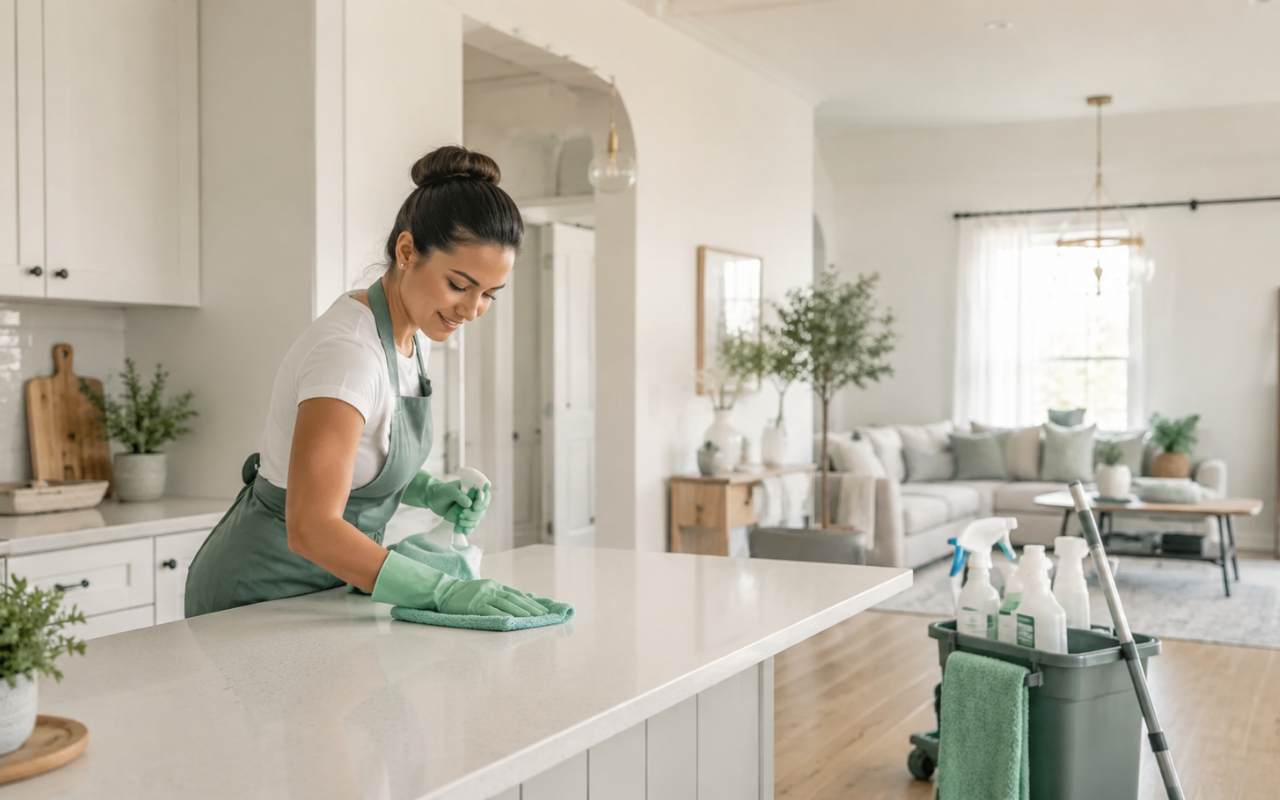
Ask before you book rather than on the morning of the clean. It is the most common avoidable friction in a first appointment.
What a company normally brings
Most established residential cleaning services arrive with:
- All-purpose, bathroom, glass and kitchen cleaners
- Disinfectant for bathrooms and kitchen surfaces
- Microfibre cloths, colour-coded by area to avoid cross-contamination
- Sponges, scrub pads and grout brushes
- Mop and bucket, or a flat mop system with washable pads
- Extendable duster
- Toilet brush — though some prefer to use yours, and some homeowners prefer that too
- Rubber gloves
- Bin liners
The colour-coded cloth point is worth asking about. It is a small operational detail, but a company that colour-codes bathroom cloths separately from kitchen cloths is a company that has thought about how cleaning is actually done.
What you are often expected to supply
- A vacuum. This is the most common exception by a distance.
- Bin liners, if the company does not carry your size.
- Specialty products for unusual surfaces — natural stone, unsealed marble, certain hardwood finishes, cast iron, some high-end appliance coatings.
- A stepladder, if anything needs reaching above standard height. Many companies will not use a customer's ladder for insurance reasons and will simply not clean above a two-step stool.
The vacuum question
Companies split roughly three ways, and each has a real reason behind it.
They bring their own. Consistent equipment, known suction, no argument about a broken machine. The downside is cross-home transport — ask whether filters and brush heads are cleaned between homes, particularly if anyone in your household has allergies.
They use yours. Avoids carrying heavy equipment between homes and eliminates any risk of transferring allergens or pet hair from another house. This is genuinely the more hygienic option. The downside is that if your vacuum is poor, the result is poor, and if it breaks mid-clean the liability question is awkward.
Either, on request. Most flexible, and the answer to look for.
If you have severe allergies, a shared vacuum is a legitimate concern and worth raising directly.
Eco-friendly, fragrance-free and low-toxicity options
Ask three separate questions, because they are not the same thing:
- Are eco-friendly products available on request, or only by default?
- Are they certified, and by whom? "Green" and "natural" are unregulated marketing words in Canada. EcoLogo (UL ECOLOGO) and Green Seal are recognised third-party certifications. A company that names a certification is telling you something; a company that says "we use natural products" is not.
- Is fragrance-free available? This matters more than most people expect. A lot of the reaction people attribute to cleaning chemicals is a reaction to fragrance, and fragrance-free is a different request from eco-friendly.
If you want to supply your own products, ask whether the company will use them — and expect that some will decline liability for results or damage when using customer-supplied products. That is a reasonable position, not a red flag.
Pets, babies and allergies
Pets. Ask about products used on floors that a dog or cat will walk across and then lick. Ask whether the cleaner is comfortable working around your animal, and whether it needs to be shut in a separate room. Ask about vacuum cross-contamination if your pet has allergies.
Infants and toddlers. Fragrance-free, and adequate ventilation and drying time on floors and low surfaces. Say which room is the nursery.
Allergies and asthma. Fragrance-free products, HEPA filtration on the vacuum, and — if it is severe — using your own vacuum rather than a shared one. Say so when booking, not on the day.
Chemicals that must never be mixed
Worth knowing whether you hire a company or clean yourself. This is a genuine safety issue, not a formality.
- Bleach + ammonia → chloramine gas. Toxic. Many glass cleaners contain ammonia.
- Bleach + vinegar (or any acid, including many bathroom and lime-scale removers) → chlorine gas.
- Bleach + rubbing alcohol → chloroform and other harmful compounds.
- Different drain cleaners → violent reaction, splashing, heat.
- Hydrogen peroxide + vinegar, mixed in the same container → peracetic acid, corrosive.
If you leave products out for a cleaner, put away anything you would not want combined, and mention any surface with a specific requirement.
Standard clean vs deep clean equipment
A deep clean usually needs equipment a standard visit does not: grout brushes and a grout-specific product, a degreaser for oven interiors and range hoods, a descaler for hard-water build-up, an extendable duster for vents and ceiling fans, and a detail brush for tracks and edges.
If you have booked a deep clean, confirm the cleaner is bringing this. A deep clean performed with standard-clean supplies is a standard clean with a deep-clean invoice. More on the difference: Standard cleaning vs deep cleaning.
What to ask before your first booking
- Do you bring all products and equipment?
- Do you bring a vacuum, or should I provide one?
- Are filters and brush heads cleaned between homes?
- Are eco-friendly options available, and are they certified?
- Is fragrance-free available?
- Will you use products I supply, and does that change your guarantee?
- Is anything excluded for insurance reasons — ladders, exterior windows, heavy furniture?
- For a deep clean, what additional equipment is being brought?
What Houmse brings
Products, equipment and vacuum. Our cleaners bring their own products, equipment and vacuum. You do not need to supply anything.
Eco-friendly products. We do not currently offer a certified eco-friendly or fragrance-free product line. If you need specific products used in your home, tell us when you book — we will tell you honestly whether we can accommodate it rather than guess on the day.
Supplies and equipment are criterion 14 on our 20-point comparison scorecard. For how we approve cleaners and what insurance covers, see Trust & Safety.
Frequently Asked Questions
Straight answers about supplies and equipment.
Have a different question? Contact us →
Ready to book without stocking the cupboard?
Houmse cleaners bring products, equipment and a vacuum. See your flat-rate price in 60 seconds.

Mah Sadegh
Mah writes about home cleaning, Toronto living, and the small routines that keep a home calm and cared for — practical tips from real homes across the GTA.
About Mah SadeghRelated reads
How to Deep Clean a House: A Room-by-Room Guide
A full deep clean takes 4 to 8 hours for most homes. Room-by-room order, what to do first, and which tasks are worth hiring out. With a printable checklist.
How to Deep Clean an Apartment: Room-by-Room Guide
Room-by-room deep clean steps for apartments, a move-in prep checklist, and GTA pricing from $220 for professional service.
House Cleaning Hourly Rates, Toronto (2026)
House cleaning in Toronto varies widely in cost depending on who you hire. Compare rate tiers by home size — and see why flat-rate pricing beats hourly every time.
Ready to book a cleaning?
Background-Checked & Insured · Same-Week Availability. Book in 60 seconds.
See My Price